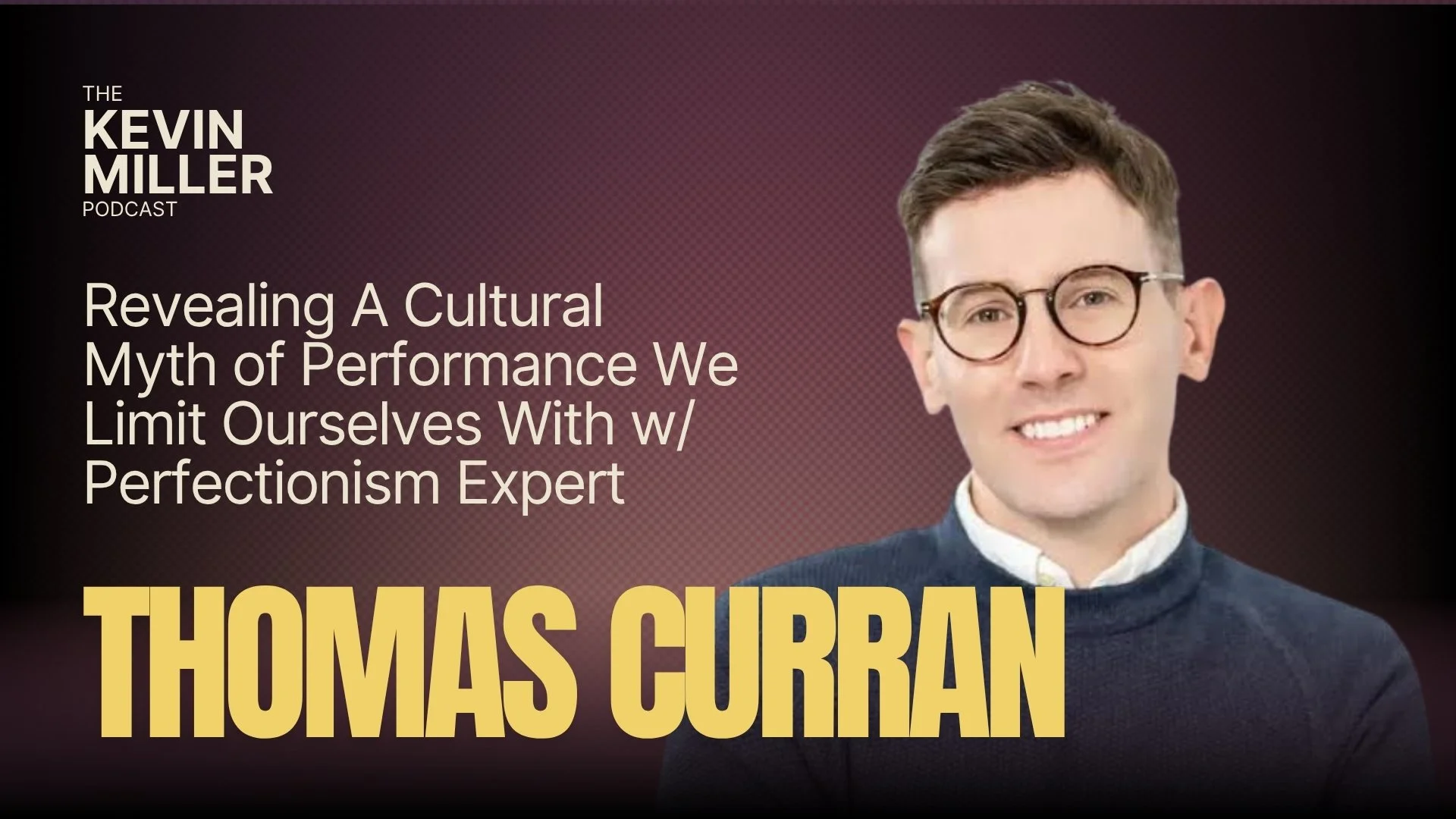
Revealing A Cultural Myth of Performance We Limit Ourselves With w/ Perfectionism Expert Thomas Curran
Episode Summary
One of our primary cultural badges is being “busy”. We adopted the idea that busyness equals importance and status. I feel in the same way we’ve adopted a badge of perfectionism. This is now a wildly common label we give ourselves, as we all struggle with our “perfectionism” as we strive for excellence, as if not being a perfectionist means we have succumbed to mediocrity. But what my guest reveals to us is how we are often hiding, protecting, and limiting ourselves with our so called concepts on perfectionism.
Thomas Curran has a PhD in psychology and is a professor in the Department of Psychological and Behavioral Science at the London School of Economics. Thomas studies the personality characteristic of perfectionism, how it develops, and how it impacts our mental health. His TED talk on our dangerous obsession with perfectionism has millions of views and his research has been featured in media ranging from the Harvard Business Review to New Scientist to CNN.
Thomas has a book titled, The Perfection Trap: Embracing the Power of Good Enough. Since talking with Thomas I completely changed my perception of perfectionism and don’t want my name associated with it. See if you feel the same after listening.
Listen to the Episode here, or on your favorite Podcast app
Watch the Full Episode and Comment on YouTube
Mentions
Thomas Curran | The Perfection Trap: Embracing the Power of Good Enough.
Sponsors
Help support the What Drives You podcast AND get some great perks and discounts from brands we love!
SHOPIFY | Sign up for a one-dollar-per-month trial period at shopify.com/kevin
SHIPSTATION | Go to shipstation.com and use code KEVIN to sign up for your FREE 60-day trial.
Links
🎤 PODCAST - https://spoti.fi/3LDxDol
🍏 - https://apple.co/3X4SS7P
🌐 WEBSITE - https://lnkd.in/gebxKB4w
🎥 YT - https://bit.ly/WhatDrivesYouPodcast
👍 SUBSCRIBE - https://bit.ly/3VBkS23
📗 BOOK - https://amzn.to/3p9m1lo
✍️ MEDIUM: https://bit.ly/3S7SyVf